Best Student Credit Card
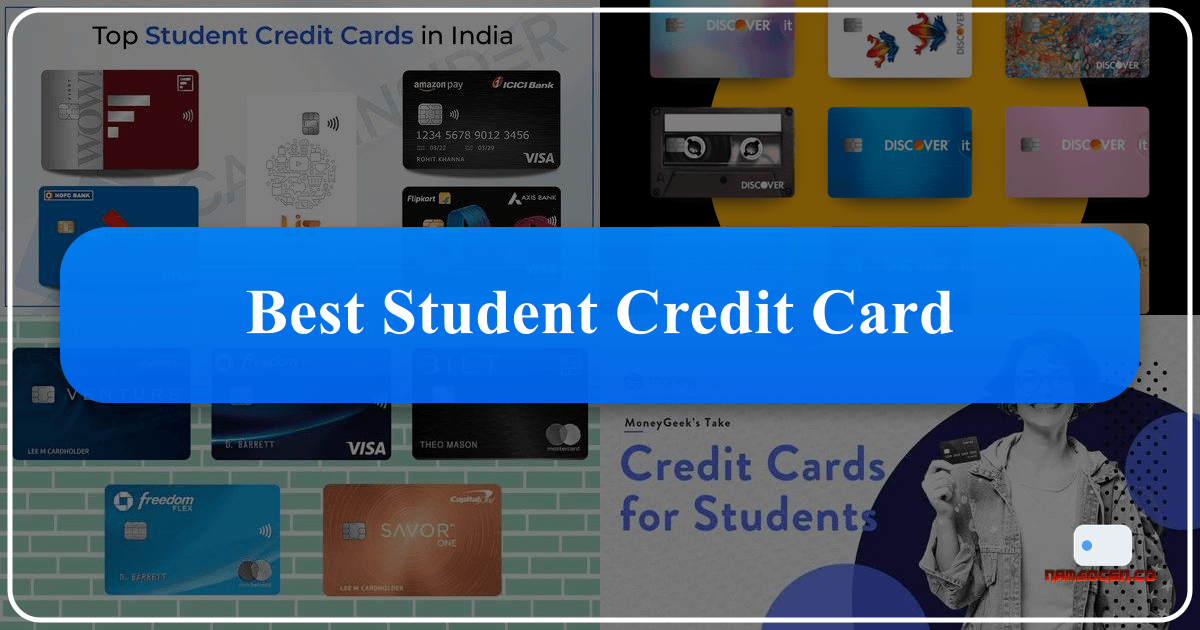
Best Student Credit Card
Embarking on your college journey or navigating the early stages of adulthood brings with it a host of new responsibilities and opportunities. Among the most crucial financial steps you can take is wisely choosing and using your first credit card. A student credit card isn't just a convenient payment tool; it's a foundational stepping stone for building a robust financial future. For many, it represents the very beginning of their credit history, impacting everything from future loan applications for a car or home, to renting an apartment, and even securing certain jobs.
At Namsogen.co, we understand that the world of credit cards can seem daunting, especially for those new to personal finance. Our goal with this comprehensive guide is to demystify student credit cards, helping you understand their benefits, potential pitfalls, and how to select the option that best aligns with your financial habits and aspirations. We'll delve into the essential factors to consider, from fees and interest rates to rewards programs and credit-building features, ensuring you're equipped to make an informed decision.
Why a Student Credit Card is Essential for Your Financial Future
For students, a credit card is more than just a piece of plastic; it's a powerful instrument for shaping your financial trajectory. Unlike debit cards, which draw directly from your bank account, credit cards allow you to borrow money, with the expectation that you will repay it, typically within a month, to avoid interest charges. This mechanism, when managed responsibly, is how you build a credit history and, subsequently, a credit score.
Building Your Credit History from Scratch
Think of your credit history as your financial report card. Lenders, landlords, and even some employers use it to assess your reliability and trustworthiness. When you have no credit history (often referred to as having a "thin file"), it can be challenging to secure loans, rent an apartment, or even get certain phone contracts. A student credit card offers a practical solution to this dilemma.
By regularly using your student credit card for small, manageable purchases and consistently paying your balance on time and in full each month, you establish a positive payment pattern. This consistent behavior is reported to the major credit bureaus (Equifax, Experian, and TransUnion), which then compile your credit report and calculate your credit score. A strong credit score, typically ranging from 300 to 850, unlocks better financial opportunities, including lower interest rates on loans, more favorable terms on future credit cards, and easier approval for housing. Starting early as a student gives you a significant advantage, allowing you to build a substantial history by the time you graduate and enter the professional world.
Understanding Credit Responsibly
While the benefits of building credit are clear, it's equally crucial to understand the responsibilities that come with a credit card. A student credit card is an opportunity to learn fundamental financial habits that will serve you throughout your life. This includes budgeting, tracking your spending, and understanding the concept of interest.
The most important rule of responsible credit card use is to avoid carrying a balance. This means paying off your entire statement balance by the due date every single month. If you only make the minimum payment, or if you carry a balance from month to month, you'll incur interest charges on the unpaid amount. These interest rates (APRs) on credit cards can be quite high, quickly turning a small purchase into a much larger debt. For students often living on tight budgets, accumulating credit card debt can be a significant setback.
Namsogen.co provides extensive resources on budgeting and financial planning, which can be invaluable tools as you learn to manage your credit card responsibly. Using a student credit card as a learning tool – making small, planned purchases, and then immediately paying them off – is the best way to leverage its power without falling into debt. It teaches discipline and foresight, essential qualities for long-term financial health.
Key Factors to Consider When Choosing a Student Credit Card
Selecting the right student credit card can feel like navigating a maze, given the multitude of options available. However, by focusing on a few critical factors, you can narrow down your choices and find a card that genuinely supports your financial goals without undue risk.
No Annual Fees
For a student, every dollar counts. An annual fee is a charge you pay just for having the credit card, regardless of how much you use it. For someone just starting their credit journey, an annual fee is an unnecessary expense that can erode any benefits the card might offer. Most reputable student credit cards understand this and come with no annual fees. Prioritizing cards without an annual fee ensures that you're not paying simply to build credit, allowing you to save that money for other essential expenses. Always check the fine print for any hidden annual charges before applying.
Competitive APRs and Interest Rates
While the primary goal should always be to pay your balance in full each month to avoid interest, understanding the Annual Percentage Rate (APR) is still crucial. The APR is the interest rate you'll be charged on any outstanding balance. Student credit cards typically have variable APRs, meaning they can change based on market conditions. If, for any unforeseen reason, you find yourself unable to pay your full balance, a lower APR will mean less interest accrues on your debt.
Look for cards that offer a relatively competitive APR, especially for purchases. Some cards may even offer an introductory 0% APR period on purchases, which can be a valuable buffer, though it's still best to pay in full. Always compare the purchase APRs of different cards on Namsogen.co to ensure you're aware of the potential cost if you carry a balance. Understanding your APR empowers you to make smarter financial decisions and minimizes the impact of unexpected circumstances.
Rewards Programs
Even student credit cards, designed primarily for credit building, often come with basic rewards programs. These can be a fantastic perk, allowing you to earn a little back on your everyday spending. The most common type of reward for student cards is cashback.
- Cashback: This typically offers a percentage of your spending back as cash, which can be redeemed as a statement credit, direct deposit, or gift cards. Some cards offer a flat rate (e.g., 1% on all purchases), while others have bonus categories that rotate quarterly (e.g., 5% on groceries one quarter, 5% on gas another). For a student, cashback on common expenses like groceries, dining, or online purchases can be incredibly practical and help offset some costs.
- Points/Miles: Less common for entry-level student cards, but some might offer points that can be redeemed for travel, merchandise, or statement credit. If you have specific travel aspirations, or if the points transfer to a loyalty program you already use, this could be an attractive option. However, for most students, the simplicity and direct utility of cashback tend to be more beneficial.
When evaluating rewards programs, consider your typical spending habits. A card offering 1% cashback on all purchases might be more consistent than one with rotating categories if you don't want to track them. Namsogen.co features detailed comparisons of various rewards programs, helping you maximize your earnings.
Credit Limit and Managing Spending
The initial credit limit offered on a student credit card is usually modest, often ranging from a few hundred to a couple of thousand dollars. This is intentional, as it helps new cardholders learn to manage credit without the temptation of overspending large sums. While a higher limit might seem appealing, a lower initial limit can actually be beneficial, acting as a natural safeguard against accumulating too much debt.
The key is to manage your spending within this limit responsibly. A crucial metric for your credit score is your credit utilization ratio – the amount of credit you're using compared to your total available credit. Keeping this ratio low (ideally below 30%) is vital for a good credit score. For example, if your credit limit is $500, try to keep your monthly balance under $150. Even if you spend more, paying it down before the statement closes can help keep your reported utilization low. As you demonstrate responsible behavior, your credit card issuer may gradually increase your limit over time, which further aids your credit score by potentially lowering your utilization ratio if your spending remains consistent.
Educational Resources and Tools
Some credit card issuers go above and beyond by offering educational resources specifically tailored for students and first-time cardholders. These resources might include:
- Credit score tracking tools: Allowing you to monitor your score and understand the factors affecting it.
- Financial literacy modules: Tutorials on budgeting, understanding APR, avoiding debt, and managing money.
- Alerts and notifications: Reminders for payment due dates or when you're approaching your credit limit.
These tools can be invaluable for learning about personal finance in a practical context. When choosing a card, check if the issuer provides these supplementary resources, as they can significantly enhance your learning experience and help you stay on track. Namsogen.co also offers a wealth of articles and guides on credit scores and financial literacy that complement these issuer-specific tools.
Top Picks for Best Student Credit Cards

top beginner student credit cards.
While we can't endorse specific product names without the reference content, we can describe the characteristics and types of student credit cards that generally rise to the top for their features and suitability for students. These cards often strike a balance between accessibility, reasonable terms, and beneficial perks.
Cards with Excellent Cashback Rewards
For students, practical rewards that can be used immediately are often the most appealing. Look for student credit cards that offer straightforward cashback programs.
- Flat-Rate Cashback Cards: These are fantastic for simplicity. They offer a consistent percentage (e.g., 1% to 1.5%) back on all purchases, without complex categories to track. This means every dollar you spend, whether on textbooks, coffee, or transportation, earns you a consistent return. The earnings can be redeemed as a statement credit, which directly reduces your bill, or deposited into your bank account.
- Bonus Category Cashback Cards: Some student cards offer higher cashback rates (e.g., 2% to 5%) in specific spending categories that are particularly relevant to students, such as groceries, dining, gas, or online purchases. These categories might rotate quarterly, requiring you to opt-in or simply use the card in those areas. While they require a little more attention, they can significantly boost your rewards if your spending aligns with the bonus categories.
These cards allow students to earn a tangible benefit from their everyday spending, effectively getting a small discount on necessary items while simultaneously building their credit history.
Cards Designed for Credit Building
Some student credit cards are specifically structured to facilitate credit building, even for those with absolutely no prior credit history.
- Lenient Approval Requirements: These cards understand that students often have limited income and no credit score. They might consider factors like enrollment status, GPA, or a co-signer (though this is less common for student-specific cards). Their primary purpose is to give new users a foot in the door.
- Clear Path to Credit Limit Increases: Issuers of these cards often review accounts after a few months of responsible use (e.g., 6-12 months) and may automatically grant a credit limit increase. This demonstrates progress and rewards good behavior, further aiding your credit utilization ratio as your available credit grows.
- Reporting to All Major Credit Bureaus: Every student card should report to Equifax, Experian, and TransUnion. This ensures that your diligent credit-building efforts are recognized by all major credit reporting agencies, giving you a comprehensive credit profile. Always verify this, as it's fundamental to building credit.
These types of cards prioritize the core function of credit building, making them ideal choices for students who are primarily focused on establishing a strong financial foundation.
Cards with Strong Welcome Offers/Bonuses
While not as common or as lucrative as those for premium adult credit cards, some student credit cards offer modest welcome bonuses or introductory perks.
- Small Cashback Bonuses: A common offer might be a fixed cashback amount (e.g., $50-$100) after you spend a certain amount (e.g., $500) within the first few months. This can be an easy way to get an extra boost of cash, provided you can meet the spending requirement without overextending yourself.
- Good Grades Rewards: Uniquely for students, some cards offer a small bonus or statement credit each year if you maintain a certain GPA. This is a creative incentive that directly rewards academic success alongside financial responsibility.
- Introductory 0% APR: A few student cards might offer an introductory period of 0% APR on purchases or balance transfers. While it’s always best to pay in full, a 0% APR on purchases can provide a safety net for a few months, giving you more flexibility without incurring interest, particularly if you have a large, planned purchase.
These welcome offers add an extra layer of value, making a student credit card even more appealing, provided the core features like no annual fee and responsible credit building are still prioritized.
Secured Credit Cards as an Alternative
For some students, especially those with no income or very limited credit history, even a student credit card might be difficult to obtain. In such cases, a secured credit card is an excellent alternative.
- How Secured Cards Work: With a secured card, you provide a cash deposit to the issuer, which then becomes your credit limit. For example, a $200 deposit gives you a $200 credit limit. This deposit acts as collateral, minimizing the risk for the issuer.
- Building Credit: Despite the deposit, a secured credit card functions almost identically to a regular unsecured credit card. Your payment activity is reported to the credit bureaus, allowing you to build a positive credit history just as effectively.
- Path to Unsecured: Many secured card issuers review your account after 6-12 months of responsible use. If you've managed your card well, they may "graduate" you to an unsecured card, returning your deposit and often increasing your credit limit.
Secured credit cards are a powerful tool for students who need to establish credit but can't qualify for an unsecured option. They provide a safe and controlled environment to demonstrate creditworthiness.
Responsible Credit Card Use: Your Path to Financial Success
Obtaining a student credit card is just the first step; using it wisely is where your true financial education begins. Mastering responsible credit card habits now will lay a robust foundation for a lifetime of financial well-being.
Always Pay Your Bill On Time and In Full
This is arguably the single most important rule of credit card management.
- On-Time Payments: Your payment history is the most significant factor in calculating your credit score (accounting for 35% of your FICO score). A single late payment can severely damage your credit score and remain on your credit report for up to seven years. Set up automatic payments or calendar reminders to ensure you never miss a due date.
- In-Full Payments: By paying your entire statement balance every month, you completely avoid interest charges. This means you only pay for what you've purchased, making your credit card a convenient payment method rather than a source of expensive debt. If you consistently pay in full, the APR becomes largely irrelevant, but it's still crucial to understand what you'd be charged if you couldn't.
Keep Your Credit Utilization Low
Your credit utilization ratio, the amount of credit you're using compared to your total available credit, is the second most important factor in your credit score (30%).
- Calculation: If you have a credit limit of $1,000 and your statement balance is $300, your utilization is 30%.
- Impact: Lenders view high utilization as a sign of financial distress or over-reliance on credit, which can negatively impact your score. Aim to keep your utilization below 30% at all times, and ideally even lower (under 10%) for the best possible scores.
- Strategy: Even if you plan to pay your bill in full, try to keep your spending throughout the month well below your limit. You can even make multiple payments during the month to keep your reported balance low when your statement closes.
Monitor Your Credit Score Regularly
Your credit score is a dynamic number that reflects your creditworthiness. Regularly monitoring it allows you to:
- Track Progress: See how your responsible credit card use is positively impacting your score.
- Identify Errors: Catch any inaccuracies or fraudulent activity on your credit report promptly.
- Understand Factors: Learn what specific actions (like new accounts or missed payments) affect your score.
Many credit card issuers offer free credit score monitoring as a perk. Additionally, Namsogen.co provides access to tools and detailed guides on how to access and understand your credit report and score, helping you stay informed and in control of your financial health.
Beware of Common Pitfalls
While credit cards offer immense benefits, they also come with risks if not managed carefully.
- Minimum Payments: While paying the minimum prevents a late fee, it's a debt trap. Only paying the minimum means you'll accrue significant interest, and it will take much longer to pay off your balance, costing you far more in the long run.
- Overspending: It's easy to get carried away with the convenience of a credit card. Treat your credit limit not as "extra money" but as a line of credit that needs to be repaid. Stick to a budget and only charge what you know you can afford to pay back.
- Cash Advances: Avoid cash advances at all costs. They typically come with higher APRs than purchases, often without a grace period, meaning interest starts accruing immediately, along with hefty fees.
- Balance Transfers (for students): While balance transfers can be useful for consolidating high-interest debt, they are generally not relevant for first-time student cardholders who should not be accumulating debt in the first place. They also usually come with a fee.
Conclusion

student credit cards with rewards.
Choosing the best student credit card is a pivotal step in your financial journey. It’s an opportunity to establish a positive credit history, learn responsible money management, and unlock future financial opportunities. By prioritizing cards with no annual fees, understanding their APRs, leveraging practical rewards, and committing to responsible usage, you can transform a simple piece of plastic into a powerful tool for building a secure financial future.
Remember that the best student credit card isn't just about the features it offers, but how you choose to use it. Pay your bills on time and in full, keep your credit utilization low, and continuously educate yourself on personal finance. Namsogen.co is here to be your trusted resource every step of the way, providing comparisons, guides, and insights to help you navigate the world of credit cards and beyond. Start wisely, build responsibly, and set yourself up for lasting financial success.